


Floral Wallpaper Ideas: How to Decorate and Pair Them Right

Floral wallpaper ideas work best when you treat the pattern like furniture, not decoration. The right placement, the right scale, and one clear focal wall will carry the whole room. Get those three things right and florals work in every interior style, from Scandi-minimal to maximalist French.
Below you will find the specific placements, furniture pairings, color strategies, and interior styles that make floral wallpaper look intentional rather than busy. Each section includes a product from the Think Noir floral wallpaper collection matched to the exact scenario described, so it is easier for you to understand what we are talking about.
- Always place floral wallpaper on a single focal wall first: behind the bed, sofa, or dining table.
- Scale matters more than color: small-scale florals read as texture in large rooms and feel balanced in small ones; large-scale florals need space to breathe.
- Neutral furniture (linen, natural wood, cream) is the safest pairing for patterned florals. Let the wall be the statement.
- Dark floral wallpaper does not make a room feel smaller if you balance it with enough light sources and keep furniture pale or reflective.
- Peel and stick floral wallpaper is the right choice for renters, or anyone testing a bold idea before committing.
- Order samples before you buy. A pattern that reads soft on a screen often reads much bolder at full scale on your actual wall.
Which Wall Should Floral Wallpaper Go On?
This is where most people go wrong. They either wallpaper all four walls and the room becomes a greenhouse, or they pick the wrong wall and the pattern reads as an afterthought.
The correct wall is the one your eye lands on first when you walk into the room. In a bedroom that is the wall behind the headboard. In a living room it is the wall behind the sofa. In a dining room it is the wall that faces the entrance. These walls function as the room's anchor, and a floral pattern placed there gives the eye somewhere purposeful to rest.
The other three walls should be painted in a color pulled directly from the wallpaper. Not the dominant color — a secondary one. If your floral has sage green foliage and blush blooms on a cream ground, paint the remaining walls warm cream, not sage and not blush. This technique ties the room together without doubling down on the pattern.
How to Choose Floral Wallpaper by Interior Style
Florals are not one-size-fits-all. The right pattern depends entirely on the interior language you are already working with. Here is how to match the two.
| Interior Style | Floral Type to Choose | What to Avoid | Best Room Placement |
|---|---|---|---|
| Romantic / French | Large-bloom peonies, roses, soft pink or blush palettes | Geometric-edged florals, high-contrast black grounds | Bedroom accent wall, powder room |
| Scandinavian | Botanical foliage, neutral-toned florals, clean grounds | Densely packed patterns, dark or jewel-tone backgrounds | Living room, home office |
| Vintage / Art Deco | Dark grounds with bold blooms, gold or graphite tones | Watercolor-soft prints, pastel washes | Dining room, entryway, bathroom |
| Bohemian / Eclectic | Botanical foliage, mixed florals, earthy tones | Overly structured repeat patterns | Any room, especially bedroom and living room |
| Maximalist | Bold, oversized blooms with rich backgrounds | Nothing! Maximalism is the point | All four walls in a dining room or study |
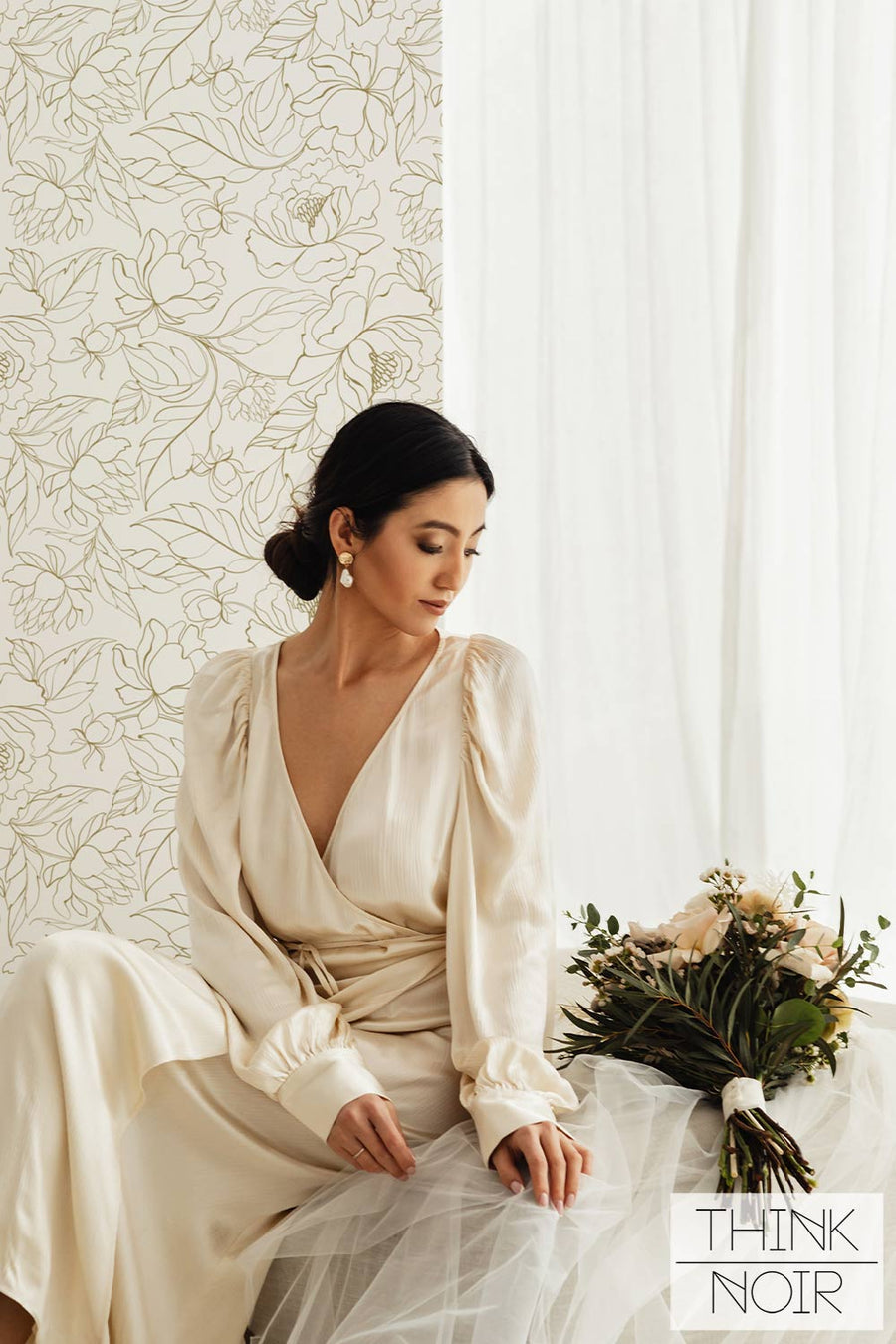
| Modern / Minimal | Single-color botanical outlines, sparse repeat patterns | Dense, multi-color, busy florals | One accent wall only |
The Best Floral Wallpaper for Romantic and French-Inspired Interiors
Romantic interiors live and die by softness. Everything is about warmth, layering, and a sense of abundance. Floral wallpaper in this context should feel lush without being crowded, like cutting peonies from a garden and spreading them across the wall.
The Simple Light Pink Peonies Wallpaper is the right call here. Its clean, soft pink blooms sit on a light ground that keeps the room from feeling heavy. Use it on the wall behind your bed and keep bedding in warm white linen or soft ivory.
Pair it with light oak or whitewashed wood furniture. Brass fixtures, cane headboards, and textured throw pillows in cream and dusty rose complete the picture. This pattern also works well in a powder room or a dressing room where you want the full-bloom effect in a contained space.

Wall color for the remaining three walls: warm white or pale blush. Avoid pure bright white — it will make the pink in the wallpaper read too sweet rather than refined.
What Pairs with Vintage Floral Wallpaper?
Vintage florals are not nostalgic in a bad way. They are specific, layered, and carry actual design history. The key to using them in a contemporary home is contrast — pair the age of the pattern with something that anchors it in the present.
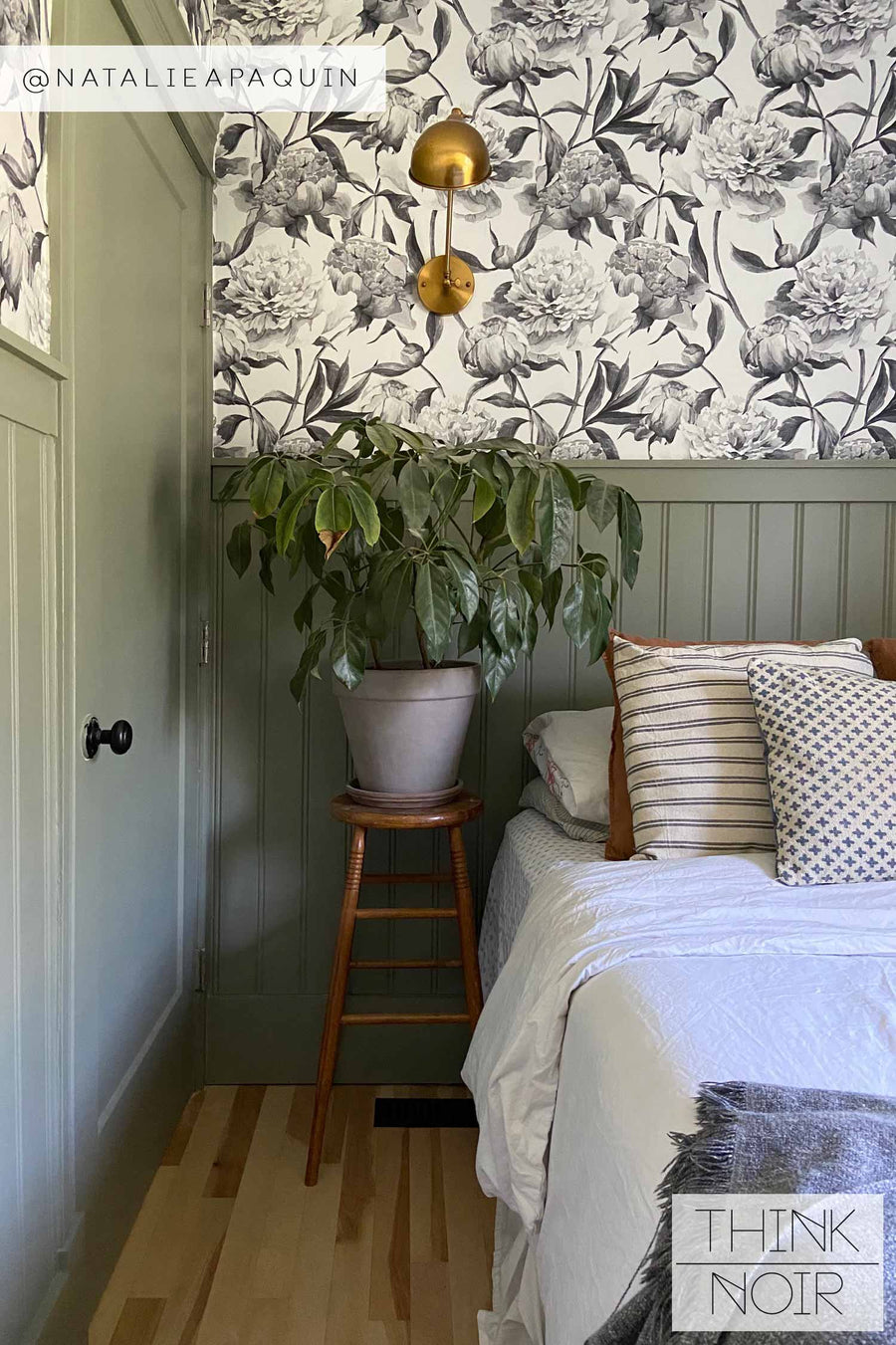
The Vintage Grey Peony Design Wallpaper is a strong example. The grey ground neutralizes what could be a very sweet subject and gives the peonies depth. Use it in a living room behind a deep-cushioned sofa in charcoal velvet or warm camel.
This pattern suits the following furniture combinations particularly well. Dark walnut or ebony wood pieces bring out the vintage character. Antique brass lighting fixtures and round mirrors with ornate frames add period detail without theme-park excess. For a more contemporary read, swap the dark wood for white lacquer and add a geometric rug — the contrast sharpens both elements.

This wallpaper also works in a home office. Grey reads as professional, the peony pattern adds personality, and the combination keeps the room from sliding into sterile corporate territory.
How to Use Dark Floral Wallpaper Without Making a Room Feel Smaller
Most people avoid dark floral wallpaper in rooms under 150 square feet because they assume it will close the space in. That fear is mostly unfounded. Dark wallpaper makes a room feel intimate, not claustrophobic — provided you pair it with enough light and keep large furniture surfaces pale or reflective.
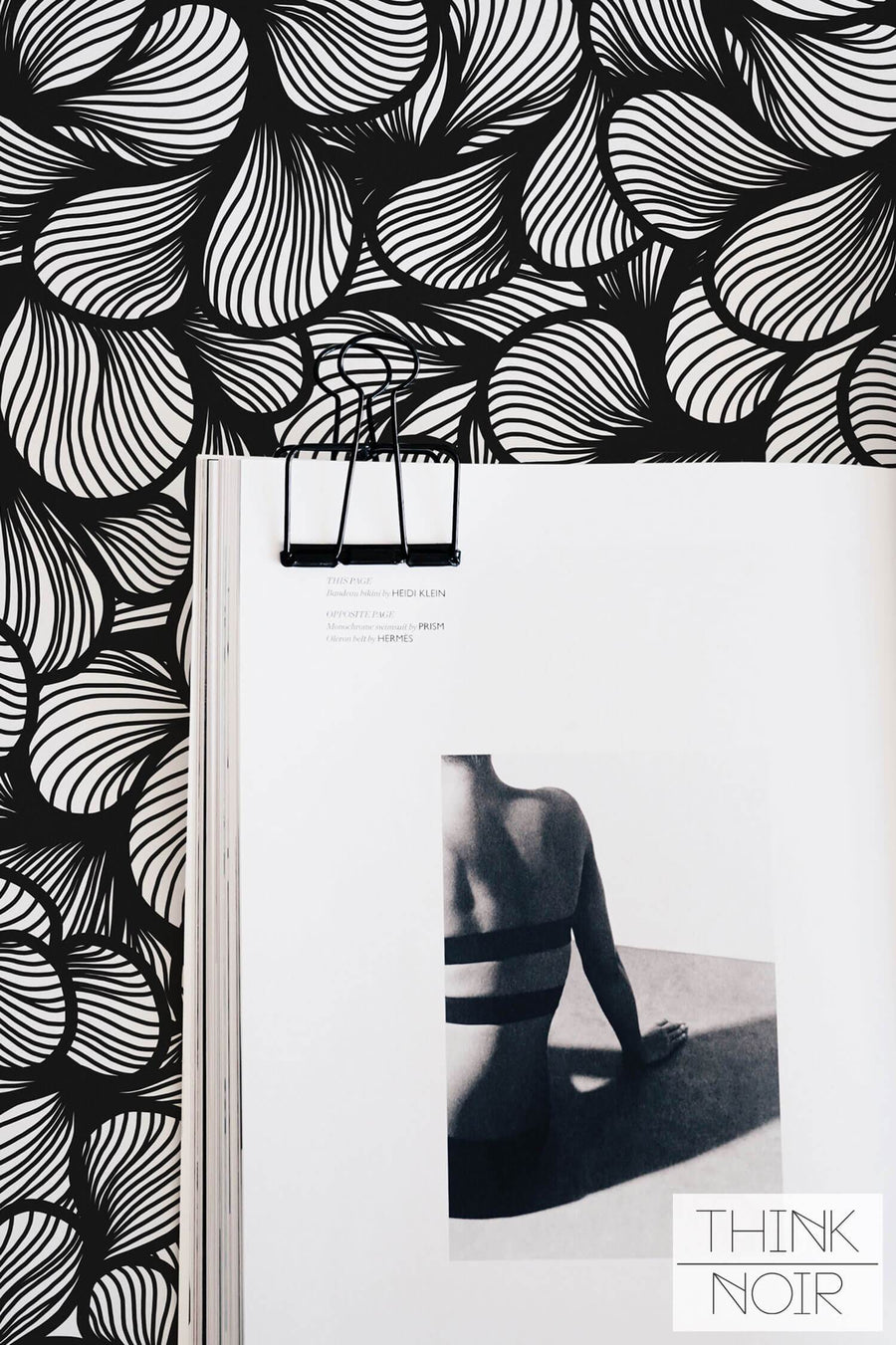
The Black Floral Art Deco Wallpaper is the most design-forward option in the Think Noir floral range. The black ground with bold blooms is a direct reference to the graphic botanical prints of 1920s decorative arts. It commands the wall rather than decorating it.
Use this on a single dining room wall behind a sideboard in pale marble or white lacquer. The contrast between the dark wallpaper and a light surface below it is what creates the visual depth. Add a brass pendant or wall sconce above the credenza — warm metallic light bounces off the dark ground and eliminates the heavy feeling.

This pattern also transforms a bathroom. A dark floral in a small bathroom feels like a jewel box. Keep the fixtures white and add a large mirror. The reflection doubles the pattern without doubling the weight.
Which Floral Wallpaper Works in a Scandi or Bohemian Interior?
Scandinavian interiors are built on restraint. Natural materials, warm neutrals, and just enough pattern to keep things from going flat. The wallpaper in a Scandi room should feel like it grew there, not like it was placed as a statement.
The Neutral Vintage Botanical Foliage Wallpaper fits this context exactly. The muted, earthy tones and hand-drawn quality of the botanical illustrate how florals can be layered into a minimal interior without disrupting the calm.
Behind a natural linen sofa with warm wood legs, this pattern reads as organic and grounded. Add a jute rug, a few terracotta pots with real plants, and a rattan floor lamp and the room feels coherent rather than curated.

This is also a strong bohemian choice. Boho interiors thrive on layering, and a botanical foliage wallpaper sits comfortably behind a gallery wall of mixed frames, a macrame hanging, or a collection of vintage plates. The pattern has enough detail to contribute without competing.
Additional Floral Wallpaper Picks Worth Knowing
Beyond the four core picks above, the Think Noir floral collection includes several other designs suited to specific rooms and moods.
The Baby Blue Peonies Removable Wallpaper is the right choice for a nursery or a teen bedroom where a full-scale romantic peony would feel too adult. The blue ground keeps it fresh and gender-neutral, and the peel and stick format means it comes down without drama when the room needs to grow up.
The Vintage Amber Peonies Wallpaper brings warm terracotta and amber tones that work naturally in a bohemian or earthy interior. Pair it with rust linen curtains and a mid-century credenza in warm walnut.
For a nursery specifically, the Baby Girl Nursery Grey Peonies Wallpaper gives a soft, considered version of the floral nursery — calmer than cartoon prints and far more design-literate. Grey grounds age well as the room transitions from nursery to child's bedroom.

What Paint Colors Work Best with Floral Wallpaper?
The rule is simple: do not repeat the main pattern color of the wallpaper on the remaining walls. Repeat a secondary or background color instead. This allows the pattern to read as the feature rather than being absorbed into the overall palette.
| Floral Wallpaper Tone | Best Adjacent Wall Color | What to Avoid |
|---|---|---|
| Soft pink peonies on cream | Warm white, ivory, pale blush | Bright white, deep pink, grey |
| Grey peonies on light ground | Warm grey, pale taupe, off-white | Bright white, navy, charcoal |
| Black floral Art Deco | Deep charcoal, forest green, warm white | Pale pink, light lavender |
| Neutral botanical foliage | Warm linen, sand, soft terracotta | Cool grey, bright white |
| Baby blue peonies | Soft white, pale grey-blue | Yellow, strong green, orange |
| Amber or terracotta florals | Warm cream, dusty sage, rust | Cool blues, stark white |
What Furniture Style Actually Works with Floral Wallpaper?
The furniture rule for floral wallpaper is the same as for any strong pattern: the wall is the statement, so the furniture should support rather than compete. That does not mean furniture has to be invisible, it means the two elements need different registers.
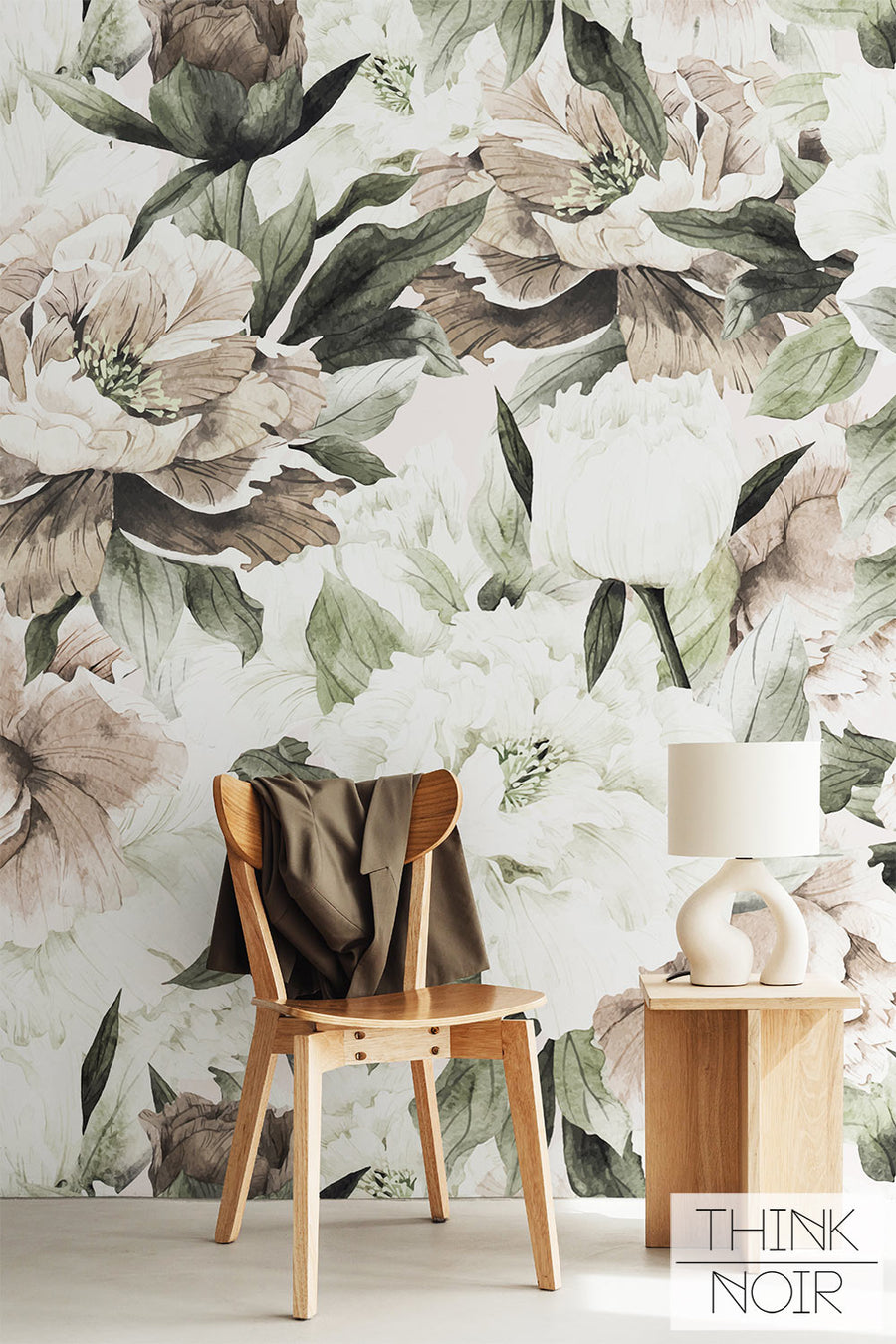
Soft, romantic florals like light pink peonies, watercolor blooms, pair best with furniture that has warmth and texture: natural wood, rattan, wicker, linen upholstery, cane detail. These materials pull the outdoors-in feeling through from wall to floor.
Dark or graphic florals like black Art Deco, bold vintage botanicals, hold their ground against richer furniture: velvet sofas in deep teal or forest green, brass and gold metal fixtures, dark walnut wood, lacquered surfaces. These pairings lean into drama rather than away from it.
Modern or botanical florals on a neutral ground pair best with clean-lined Scandi or mid-century furniture. Think solid wood legs, muted upholstery, and zero ornament. The restraint of the furniture lets the natural detail of the pattern read clearly.
Tips for Getting Floral Wallpaper Right the First Time
Order a sample before you commit. Patterns that look delicate at thumbnail scale often read much bolder at full wall scale. Think Noir offers wallpaper samples so you can see the actual print in your room's light before ordering.
Scale the pattern to the room. Large-scale blooms work in rooms with at least 9-foot ceilings or generous square footage. In compact rooms, small-repeat or single-color botanical patterns are the better call — they add presence without compression.
Use one accent wall, not four. Unless you are going deliberately maximalist, one pattern wall is always stronger than four. It gives the eye a clear focal point and leaves room for the rest of the room to breathe.
Check the wallpaper type before you order. If you are a renter or want the option to redecorate easily, choose peel and stick wallpaper. For a permanent installation in a formal room, traditional paste-the-wall gives a crisper finish. Think Noir's Commercial Vinyl Type II is the right call for high-traffic spaces like hallways or powder rooms that get heavy use.
Light the wallpapered wall directly. A sconce, a picture light, or a well-placed floor lamp aimed at the wallpapered wall will bring the pattern to life at night. Dark florals especially benefit from warm directional lighting — it reveals the depth in the design that overhead light tends to flatten.
Which Rooms Suit Floral Wallpaper Best?
| Room | Best Floral Type | Why It Works |
|---|---|---|
| Bedroom | Soft peonies, botanical foliage, vintage prints | Creates a calm, layered backdrop behind the bed without demanding attention |
| Living Room | Botanical foliage, vintage grey florals, bold peonies | Anchors the sofa wall and gives the room a clear focal point |
| Dining Room | Dark florals, Art Deco botanicals, dramatic large-bloom prints | Dining rooms are used in short, concentrated moments — bold choices work best here |
| Bathroom | Dark florals, black and white botanicals | Small space benefits from the jewel box effect; dark patterns feel considered at small scale |
| Nursery or Kids Room | Soft blue peonies, grey nursery prints, pastel botanicals | Calm, gender-neutral options that grow with the child |
| Home Office | Neutral botanical foliage, vintage grey prints | Adds personality and creative energy without distraction |
| Entryway / Foyer | Bold florals, dark Art Deco patterns | First impression spaces can handle the most dramatic choices |
Frequently Asked Questions About Floral Wallpaper
Which wall should floral wallpaper go on?
The accent wall behind your bed, sofa, or dining table is the strongest placement. It creates a focal point without overwhelming the room. Use the other walls in a coordinating paint color pulled from the wallpaper pattern.
Does floral wallpaper work in small rooms?
Yes, with the right scale. Small, delicate floral prints on a light background will make a compact room feel larger and brighter. Avoid oversized, dense patterns in tight spaces — they compress the room visually.
What furniture style pairs with floral wallpaper?
Soft florals pair with natural materials: rattan, light wood, linen upholstery. Bold or dark florals work well with velvet, brass accents, and darker wood tones. For modern interiors, keep furniture minimal and let the wallpaper do the work.
Can you use floral wallpaper in a modern or Scandi interior?
Absolutely. Choose a botanical or single-color floral on a white or off-white ground. Pair with clean-lined furniture, warm wood tones, and textured linen to keep the space grounded and current.
Is peel and stick floral wallpaper a good option for renters?
It is the ideal option. Think Noir's peel and stick floral wallpaper is fully removable and repositionable, so you can redecorate without losing your deposit. Apply it to a properly primed, smooth wall for the best result.
What paint color works best with floral wallpaper?
Pull a secondary color directly from the wallpaper pattern and use it on adjoining walls or woodwork. Neutral whites and warm creams work universally. Avoid matching the dominant color of the wallpaper to your walls — that flattens the whole effect.

The Right Way to Start
Floral wallpaper ideas reward decisiveness. Pick one wall, pick one pattern, and commit. The rooms that look wrong are almost always the ones where someone hedged, a timid print on the wrong wall, surrounded by furniture that tries to match rather than contrast.
Browse the full Think Noir Floral Wallpaper collection to find the right scale and palette for your room. If you are torn between two designs, order wallpaper samples to check the pattern and color in your actual room lighting before you commit. The sample is the step most people skip and the one that prevents most mistakes.
Sources
- Think Noir Wallpaper — Floral Wallpaper Collection: thinknoirwallpaper.com/collections/flower-floral-wallpaper
- Homes and Gardens — 11 Wallpaper Trends to Watch in 2025: homesandgardens.com
- Livspace — The Blooming Revival: Your Guide to Floral Wallpaper Designs in 2025: livspace.com
- Mindful Hues — A Beginner's Guide to Choosing Floral Wallpaper for Your Bedroom: mindfulhues.com
- Dulux Decorator Centre — How to Style Floral Wallpaper: duluxdecoratorcentre.co.uk
Design Editor
B.A. Interior Design. Previously junior editor at a residential design studio in New York.
Elizabeth writes Think Noir's educational guides on color, light, and room architecture. She believes most people overthink wallpaper scale and underthink wall color. Her content is built around one principle: give the reader the answer before they have to ask for it.
