


How To Choose Wallpaper For Small Living Room

In a small living room, start by identifying what the room needs wallpaper to fix. Low ceiling, no clear feature wall, open-plan layout with no definition: each problem has a different solution. Choose the pattern last, not first.
- Diagnose the room's problem before choosing a pattern. Low ceiling, no feature wall, open-plan layout, and awkward proportions all have different wallpaper solutions.
- Vertical stripe wallpaper is the most direct fix for a small living room with a low ceiling. It adds perceived height without any structural change.
- In an open-plan layout, wallpaper behind the sofa defines the living zone visually without building a wall. This is one of the most effective uses of wallpaper in a compact home.
- Match pattern scale to furniture weight. A chunky sofa needs a bold pattern. Slender furniture needs a finer repeat. Mismatching these makes a room feel unresolved.
- If the room has no clear feature wall, wallpaper inside an alcove is a legitimate and highly effective alternative.
- Peel and stick wallpaper is the right format for a small living room where you want to experiment. Low commitment, clean removal, repositionable during installation.

What Problem Does Your Small Living Room Actually Have?
This is the question most people skip. They go straight to browsing patterns without first identifying what the room needs wallpaper to do. The result is a beautiful pattern that does nothing to address what actually made the room feel difficult.
Most small living rooms have one primary problem. Identify it and the wallpaper choice becomes straightforward.
| Problem | What Wallpaper Can Do | Solution |
|---|---|---|
| Ceiling feels low | Draw the eye upward and create perceived height | Vertical stripe on the sofa wall or all four walls |
| No clear feature wall | Create a focal point where the room has none | Wallpaper inside an alcove, or the chimney breast |
| Open-plan layout with no definition | Establish a visual boundary for the living zone | Bold or textured pattern on the wall behind the sofa |
| Room feels narrow or boxy | Add depth and break the sense of flat walls | Large, sparsely placed motif on a light ground on the short wall |
| Room feels like a corridor | Widen the visual field | Bold pattern on the short end wall to stop the eye |
| Room feels generic and undesigned | Give the space a clear aesthetic identity | A pattern that commits to a style: botanical, Art Deco, geometric |
What If the Small Living Room Has No Clear Feature Wall?
This is more common than most wallpaper guides acknowledge. Many small living rooms have a doorway on one wall, a window on another, a radiator on a third, and a TV unit against the fourth. Every surface is interrupted. There is no clean wall to wallpaper.
Two solutions that actually work:
First, look for the wall with the fewest interruptions. A doorway is less disruptive than a window, because the pattern continues on either side of the door frame and still reads as a whole. A wall with one doorway and nothing else is usually your best candidate even if it does not feel obvious.
Second, consider an alcove instead of a full wall. Wallpapering inside an alcove on either side of a chimney breast creates a strong focal point without needing an uninterrupted surface. The pattern is contained, the result looks deliberate, and it often reads as more considered than a standard feature wall. Browse the Bold collection for patterns that hold their presence at small scale inside an alcove.

How Do You Use Wallpaper in a Small Open-Plan Living Room?
Open-plan living rooms have the opposite problem from enclosed ones. Instead of too little space, the challenge is too much undefined space, with the living zone bleeding into the kitchen or dining area with nothing to anchor it.
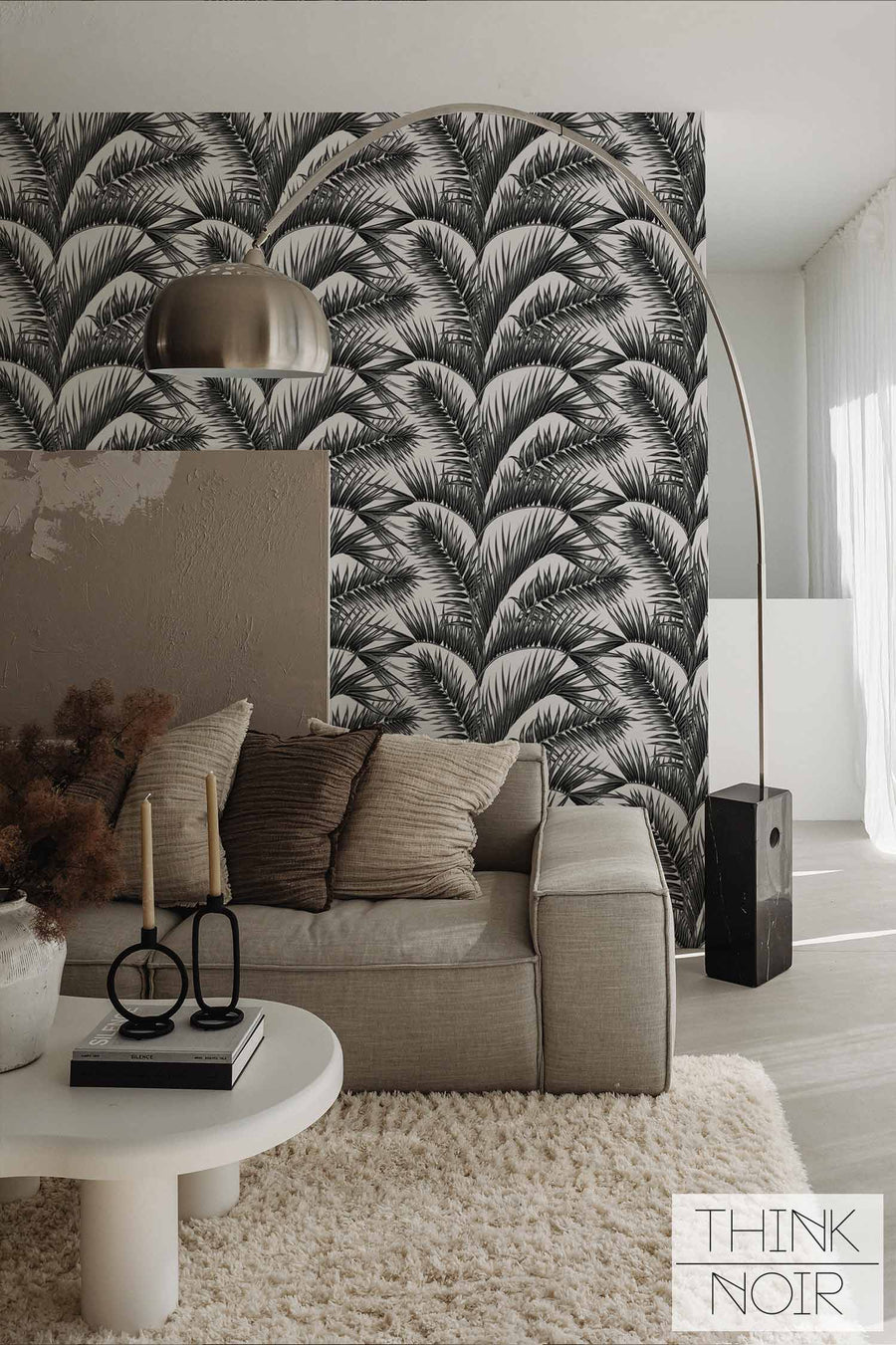
Wallpaper on the wall behind the sofa solves this without a partition or room divider. The pattern creates a visual boundary the eye reads as a separate zone. People sitting in the living area feel contained in a deliberate space rather than floating in an undefined open plan.
The pattern choice matters more in an open-plan room than anywhere else. It needs to work with the adjacent zones, not fight them:
- Choose a pattern that shares at least one color with the kitchen or dining area visible from the living zone. This keeps the open plan feeling connected rather than chopped into competing schemes.
- Avoid very dense, high-contrast patterns in open-plan living rooms. From the kitchen, the living room wall reads as part of the wider space. An overpowering pattern creates visual noise across the entire floor plate.
- A botanical or geometric in a mid-tone that bridges the color temperatures of the two zones is almost always the right call. Browse the Botanical and Geometric collections for options that work across both enclosed and open-plan conditions.
My Sofa Is Against the Feature Wall. Does Wallpaper Still Work?
Yes. This concern is more common than it should be.
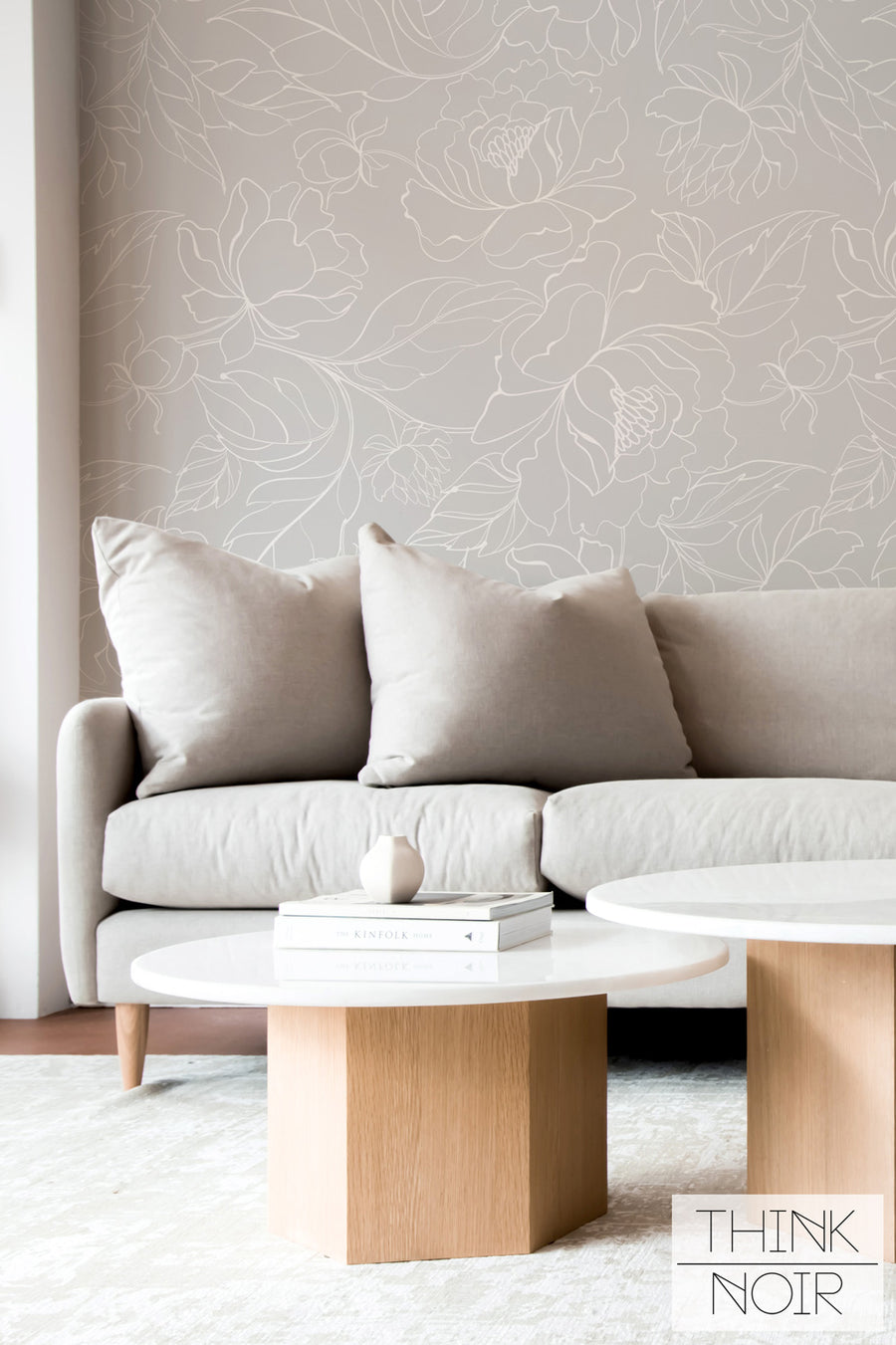
The sofa sitting against a wallpapered wall does not cancel the effect. The pattern is visible above the sofa back, frames the seating area, and reads as a clear design decision from anywhere else in the room. The wall is still the backdrop. The sofa becomes part of the composition rather than blocking it.
What changes: pattern scale matters more. A very fine repeat at low height will disappear behind the sofa cushions and lose its effect entirely. Use a medium to large pattern so the section of wall above the sofa carries the design clearly.
Match the pattern weight to the sofa too. A large, chunky sofa needs a pattern with corresponding visual weight. A slender mid-century or Scandi sofa suits a finer repeat. Mismatching pattern scale and furniture weight is the most common reason a wallpaper choice feels off without anyone being able to say exactly why.
| Furniture Style | Pattern Scale to Use | Think Noir Collection |
|---|---|---|
| Large, substantial sofa (deep seat, high back) | Bold geometric, oversized botanical, strong Art Deco repeat | Bold / Art Deco |
| Mid-century or Scandi (slender legs, low profile) | Fine repeat geometric, delicate botanical, tone-on-tone texture | Scandi / Geometric |
| Modular or corner sofa | Large motif on a light ground, or a mural-style botanical | Botanical / Jungle |
| Armchairs with no sofa | Medium repeat, any style. The wall carries more visual weight without a sofa dominating it. | Living Room collection |

How Do You Fix a Small Living Room That Feels Like a Corridor?
Long, narrow living rooms are one of the most common small living room layouts and one of the most misdiagnosed. Most people reach for vertical stripes, which add height but do nothing to address the narrowness. In a corridor room that is the wrong fix.
Two approaches that actually work:
A bold pattern or deep color on the short end wall stops the eye at the end of the room and makes the space feel shorter and wider rather than long and thin. The eye goes to the pattern first, reads the width of the room, and does not race down the length. A geometric or botanical on the end wall in a strong color is far more effective here than any stripe.
The second option: a pattern with a horizontal emphasis on the longest wall. A wide horizontal stripe, or a repeat whose motifs move more laterally than vertically, pulls the eye across the wall rather than along the room. Browse the Stripe collection for options in both orientations.
Which Wallpaper Style Works Best in a Small Living Room?
Style choice should solve the room's problem and reinforce the mood you want. Not the other way around.
| Room Problem | Best Style | Think Noir Collection |
|---|---|---|
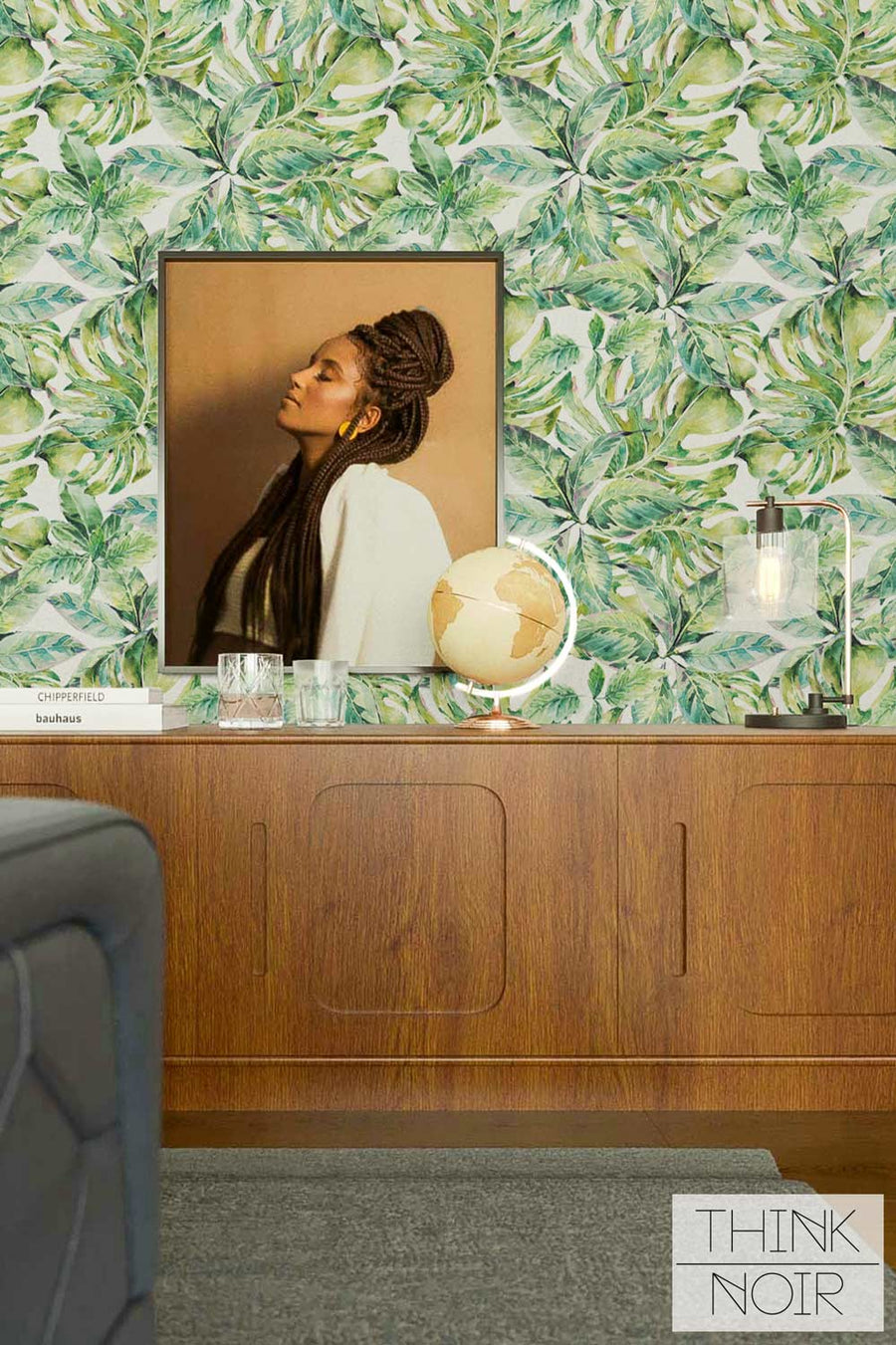
| No focal point, room feels generic | Bold botanical or Art Deco on the strongest available wall | Botanical / Art Deco |
| Low ceiling | Vertical stripe in two tones, floor to ceiling | Stripe |
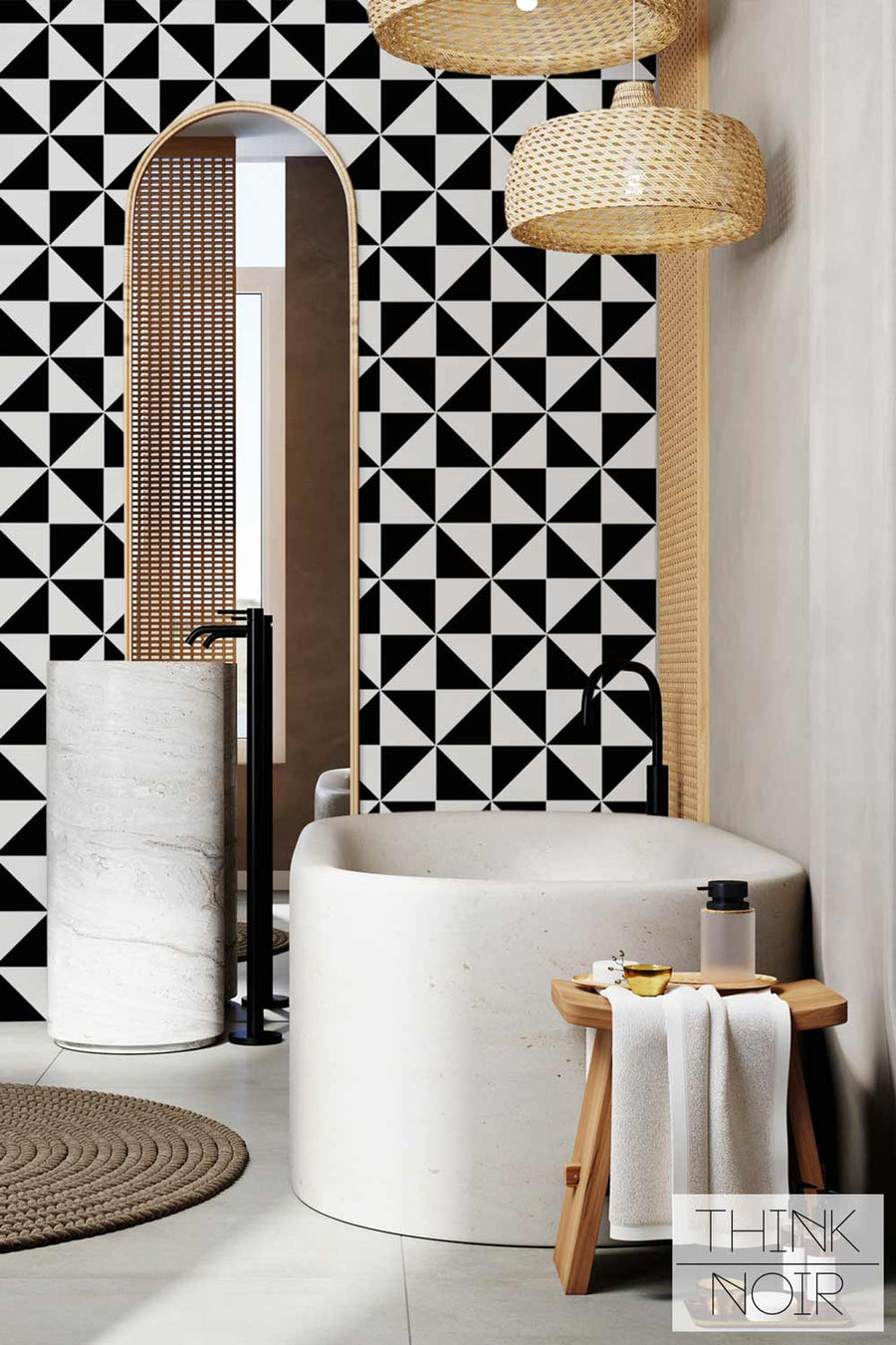
| Open-plan, needs zone definition | Medium geometric or botanical in a bridging color | Geometric / Botanical |
| Narrow, corridor-shaped room | Bold pattern on the short end wall | Bold |
| Room needs warmth, feels cold or clinical | Warm-toned floral or vintage repeat on the sofa wall | Floral / Vintage |
| Neutral room, needs personality without commitment | Tone-on-tone Scandi or neutral pattern across all four walls | Scandi / Neutral |
Peel and Stick or Traditional for a Small Living Room?
A small living room is a high-visibility space. You look at it every day. Getting the pattern wrong matters more than it does in a room you rarely use, which is exactly the argument for starting with peel and stick wallpaper.
If the pattern reads differently at full scale than it did on a sample, peel and stick lets you course-correct without damage or cost. It is also the right format for anyone renting a small flat where the living room is the first and most visible room a guest sees.
Traditional paste-the-wall is the right call when you have verified the pattern at scale, committed to the long term, and want the most seamless, professional finish. It will not lift at the edges if the room gets warm or furniture is regularly moved against the wall.
Frequently Asked Questions
What do you do when a small living room has no clear feature wall?
Find the wall with the fewest interruptions and use it, even if it has one doorway. If every wall is interrupted, wallpaper inside an alcove on either side of a chimney breast creates a strong focal point without needing an uninterrupted surface. This is often a more interesting result than a standard feature wall.
Can wallpaper make a small living room with low ceilings feel bigger?
Yes. Vertical stripe wallpaper is the most direct solution. Run it floor to ceiling with no dado rail breaking it for maximum effect. Browse the Stripe collection for options across bold and subtle directions.
How do you use wallpaper in an open-plan small living room?
Wallpaper the wall behind the sofa. The pattern creates a visual boundary that defines the living zone without a partition. Choose a color that bridges the adjacent kitchen or dining area so the open plan reads as a connected whole. See the living room collection for starting points.
My sofa is pushed against the feature wall. Can I still use wallpaper behind it?
Yes. The pattern is still visible above the sofa back and still frames the seating area from across the room. Use a medium to large pattern so the section above the sofa carries the design clearly. A fine repeat at that height disappears behind the furniture entirely.
Is peel and stick wallpaper suitable for a small living room?
Yes, and particularly well suited to it. A small, high-visibility room is exactly where the ability to course-correct matters most. Peel and stick lets you try a pattern at full scale and remove it cleanly if it reads differently than expected. See the full range at Think Noir peel and stick wallpaper.
Should the wallpaper pattern match the size of the furniture?
Yes. Pattern scale and furniture weight should correspond. A large chunky sofa needs a bold pattern with matching visual weight. A slender Scandi or mid-century piece suits a finer repeat. When these are mismatched the room feels unresolved without anyone being able to identify why.
Diagnose First. Choose Second.
For the broader principles that apply across all compact spaces, the complete guide to choosing wallpaper for small rooms covers pattern scale, color, and one-wall versus four-wall logic in full.
For this room specifically: name the problem before you open a pattern browser. The Think Noir living room wallpaper collection covers every direction, from quiet Scandi neutrals through to bold botanicals and graphic geometrics. If you are torn between two designs, order wallpaper samples and put them on the actual wall for two days. The problem the room has will tell you which one is right.
Sources
- Ideal Home, 27 Living Room Wallpaper Ideas: alcove wallpaper and dado rail technique for small rooms. idealhome.co.uk
- Living Etc, 16 Living Room Wallpaper Ideas: pattern and furniture pairing, awkward layout solutions. livingetc.com
- Coohom, Living Room Wallpaper Ideas: furniture weight and pattern scale matching guidance. coohom.com
Design Editor
B.A. Interior Design. Previously junior editor at a residential design studio in New York.
Elizabeth writes Think Noir's educational guides on color, light, and room architecture. She believes most people overthink wallpaper scale and underthink wall color. Her content is built around one principle: give the reader the answer before they have to ask for it.
